
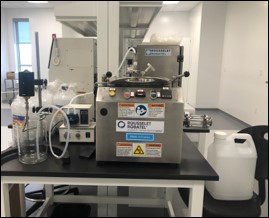
For chemistry, pharmaceutical, biotechnology, food, or other industrial applications, a centrifuge test center acts as the bridge between laboratory research and commercial production. Data generated during centrifuge testing helps application engineers understand how variables such as solids concentration, viscosity, temperature, and feed composition affect separation performance at larger scales. The well-equipped Rousselet-Robatel centrifuge test center allows prospective organizations to:
Application Development Services Test Centrifuges and Centrifuge Test Center for Process Development
Test Your Centrifuge Process
Before You Invest
Successful scale-up starts with understanding your process. While many separation technologies perform well in initial trials, scale-up can introduce unexpected challenges. Our testing programs start with a low-risk approach to help validate performance early, which drives a reduction in technical risk before investing in equipment.
Available application development and validation services include:
- On-site demonstrations with rental centrifuges
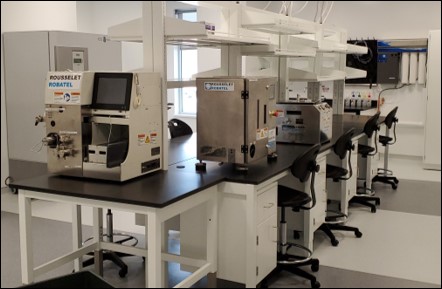
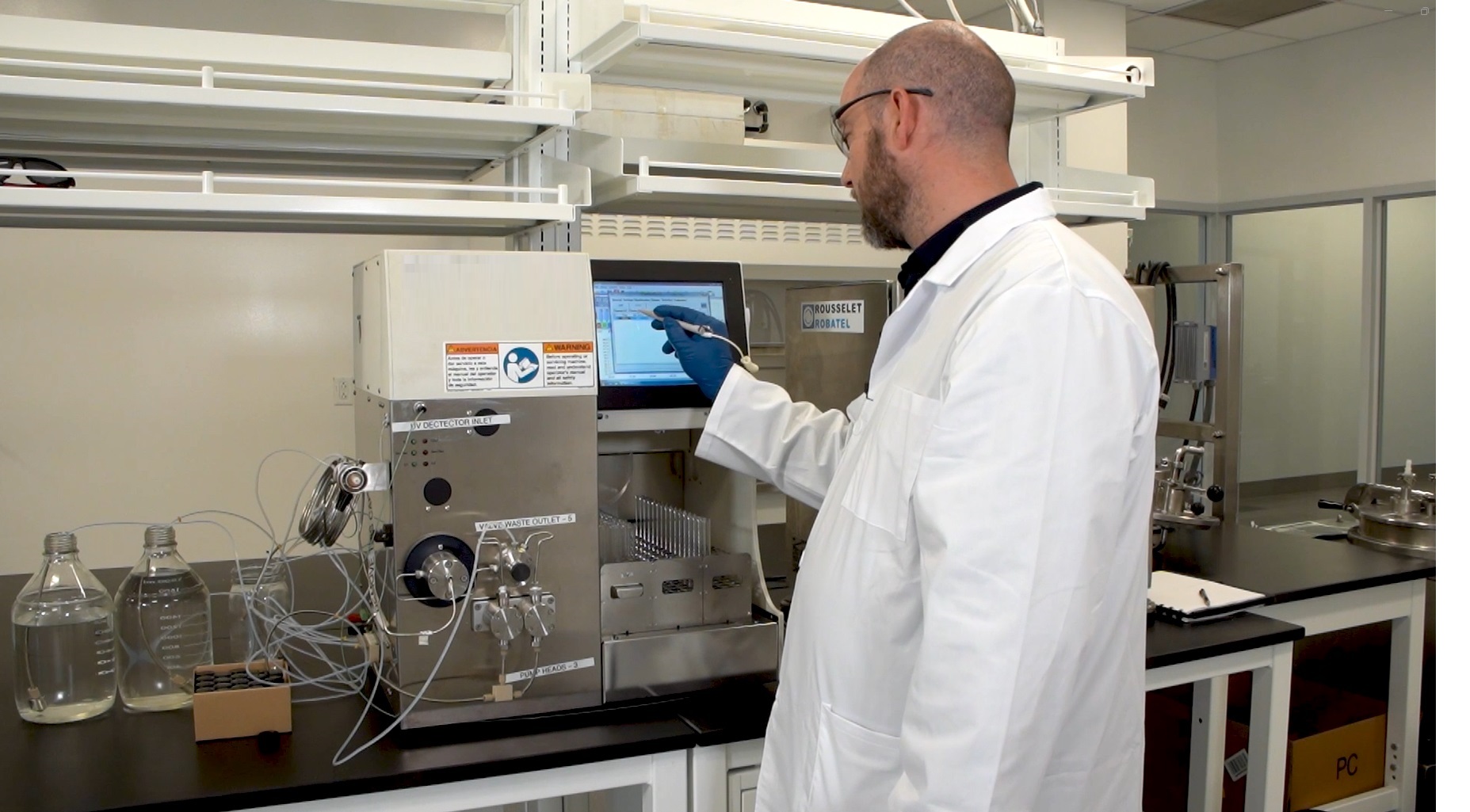
- Testing at our wet lab in the Berkshire Innovation Center
- Fast, data-driven process validation to support confident scale-up decisions
Start Your Test Program
Most separation processes fail during scale-up—not initial testing. That’s why we start by validating how your material behaves before designing the system around it.
What We Test and Measure
The primary purpose of a validating your process with centrifugation tests is to reduce scale-up risk by generating process data that can be used to select equipment, optimize operating parameters, and predict full-scale performance. The typical activities performed during centrifuge tests at the job-site or at the centrifuge test center include:
- Feasibility testing to determine whether centrifugation is a suitable separation method.
- Process development to optimize separation efficiency, product recovery, and product quality.
- Scale-up studies to establish correlations between laboratory, pilot, and commercial equipment performance.
- Centrifuge selection based on throughput, solids characteristics, clarification requirements, and process objectives.
- Parameter optimization, including:
- Feed concentration
- Flow rate
- Bowl speed (G-force)
- Differential speed
- Temperature
- pH
- Viscosity
- Solids loading
- Product characterization to evaluate yield, purity, moisture content, particle size distribution, and other critical quality attributes.
Answers to testing questions
Rousselet-Robatel is Your Partner in Process Development™.
As your partner, we provide fully integrated centrifugation solutions supported by a dedicated application engineering team. From process development and testing through scale-up and implementation, we work alongside you to ensure successful industrial separation and extraction outcomes.
We offer flexible testing options to support process development and scale-up. Depending on your application, centrifuges can be rented for on-site trials, allowing your team to evaluate performance under actual operating conditions. Alternatively, samples can be submitted to the Rousselet-Robatel Centrifuge Test Center, where our experienced application engineers conduct characterization testing and provide data-driven process recommendations.
- Minimize technical and economic risk before capital investment.
- Generate data for process design and equipment sizing.
- Define operating windows and process limits.
- Evaluate product behavior under multiple processing conditions.
- Improve process robustness and reproducibility.
- Support technology transfer from R&D to manufacturing.
- Develop a complete process reference profile for future scale-up activities.
Certain materials may present safety, regulatory, or logistical challenges that limit their suitability for testing in a centralized laboratory environment. Depending on the product being evaluated, hazards associated with handling, storage, or processing may exceed the safety requirements and capabilities of the test facility. In other cases, products may contain proprietary formulations, require strict chain-of-custody controls, or exhibit instability that can alter their physical or chemical characteristics during transportation between the client’s facility and the centrifuge test center.
To address these challenges, Rousselet-Robatel offers multiple testing pathways, including both laboratory-based evaluations and on-site trials. This flexible approach enables customers to generate meaningful process data while accommodating safety requirements, protecting confidential information, and ensuring that testing is performed on representative materials under appropriate operating conditions.
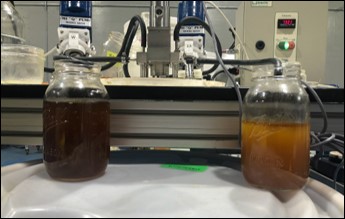
During wet lab testing, material samples are sent to the Rousselet-Robatel Test Center, where our application engineers design, conduct, and evaluate the test program. These controlled studies focus on characterizing material behavior, determining separation feasibility, optimizing process parameters, and generating the data required for equipment selection and scale-up.
During job-site testing, centrifuges are deployed to the customer’s facility, allowing the process to be evaluated under actual operating conditions. The customer operates the equipment using their process streams, utilities, and production environment to validate performance, integration requirements, throughput, and operational viability prior to capital investment.
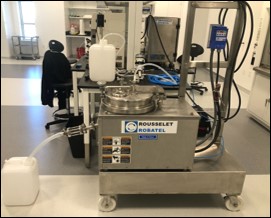
Regardless of the testing location, Rousselet-Robatel maintains a fleet of development-scale and pilot-scale centrifuges that enable customers to evaluate centrifugal separation technologies prior to commercial scale-up. Depending on the process requirements and equipment configuration, testing capabilities include both solid-liquid separation and liquid-liquid extraction and separation applications.
These evaluations provide critical scale-up data, allowing process developers to optimize operating parameters, assess separation performance, and quantify extraction efficiency under representative process conditions. The resulting data supports informed equipment selection, process validation, and successful transition to full-scale production.
Whether at the job-site or in the centrifuge test center, application development testing allows us to develop the process knowledge required to make informed centrifuge selection decisions. By characterizing material properties, separation behavior, product quality requirements, and operating sensitivities, development teams can identify the most suitable centrifuge technology, define scale-up parameters, and establish a reliable foundation for pilot and commercial manufacturing. The resulting data reduces technical risk and ensures that the selected centrifuge is aligned with both process objectives and production requirements. Information typically developed as the basis for centrifuge selection and process design includes:
- Determining the separation objective, which helps determine the appropriate centrifuge technology.
- Evaluating separation performance to determine whether a particular centrifuge design is capable of meeting processing thresholds.
- Confirming equipment capacities as the process is scaled-up from the laboratory to the pilot plant and to the production floor.
- Defining process duration to ensure that the centrifuge’s normal operating range can accommodate process variabilities.
The primary objective of application development trials is to establish a thorough understanding of the application while generating a robust reference dataset to support successful process scale-up. At laboratory scale, critical process parameters such as feed concentration, viscosity, pH, temperature, and centrifugation conditions can significantly impact separation efficiency, product recovery, and overall product quality.
Effective scale-up begins with a clear understanding of the desired full-scale process performance and operational objectives. The wet lab environment provides the flexibility to systematically evaluate process performance across a range of operating conditions, enabling research teams to identify key process drivers, define operating windows, and understand parameter sensitivities.
By generating meaningful process data under controlled and variable conditions, development teams can make informed decisions that reduce technical risk, improve process robustness, and optimize performance. This data-driven approach establishes a strong foundation for scale-up, ensuring that critical process knowledge is captured early and translated into scalable, efficient, and reproducible manufacturing operations as production requirements increase.
A successful wet lab or onsite testing program begins with a complete understanding of the application. The information gathered before testing allows process engineers to select the appropriate centrifuge technology, develop a representative test plan, identify critical process parameters, and generate data that can be confidently used for pilot studies, equipment sizing, and commercial scale-up. Ultimately, better application data leads to more accurate test results and lower scale-up risk.
As your Partner in Process Development™, Rousselet-Robatel’s application engineers typically request that the client define and/or provide:
✓ Process description
✓ Material composition
✓ Safety Data Sheets
✓ Solids concentration
✓ Particle size information
✓ Density and viscosity data
✓ Temperature and pH ranges
✓ Target product specifications
✓ Desired throughput
✓ Available sample volume
✓ Scale-up and commercialization goals
As the first step in characterizing the separation or extraction process, laboratory testing typically focuses on understanding how the products and processes behave under controlled laboratory conditions at the milliliter to liters scale. Typical lab scale objectives include:
- Determining technical feasibility.
- Evaluating separation performance.
- Identifying critical process parameters.
- Developing a process reference profile.
- Optimizing chemistry and operating conditions
Using the collected lab data as a basis, it follows that a testing regime at the pilot scale (volumes between laboratory development and commercial production) would be designed using equipment that more closely resembles the design and operation of full-scale manufacturing systems. Typical pilot scale testing objectives include:
- Validating laboratory findings at larger scale.
- Demonstrating process robustness.
- Generating engineering and design data.
- Proving throughput capacities and process economics.
- Reducing scale-up risk before capital investment.
Customer Impact
Our testing programs have helped customers make more informed decisions during process development by demonstrating the performance of different centrifuge technologies under real operating conditions. By conducting trials in our wet laboratory, customers can evaluate separation efficiency, product recovery, solids handling characteristics, and equipment suitability before committing to a capital investment.
This practical, data-driven approach helps reduce technical and financial risk by minimizing the potential for selecting an undersized, oversized, or otherwise unsuitable centrifuge solution. Testing can also reveal opportunities to improve process performance, increase throughput, enhance product quality, and reduce operating costs before full-scale implementation.
Because many of the projects we support involve proprietary processes and confidential product information, detailed case studies are often unavailable. However, Rousselet-Robatel has extensive experience assisting customers across a wide range of industries with process development, scale-up, and equipment selection challenges.
Contact Rousselet-Robatel to learn more about how centrifuge testing can support your specific application and help identify the most effective separation solution before investing in production-scale equipment. Our experts are available to discuss your process objectives and recommend an appropriate testing program.
About The Berkshire Innovation Center
The Berkshire Innovation Center (BIC) is a nonprofit innovation and technology hub, which was created to help manufacturers, life sciences companies, startups, and technology-focused organizations access advanced equipment, technical expertise, workforce development programs, and collaborative research opportunities.
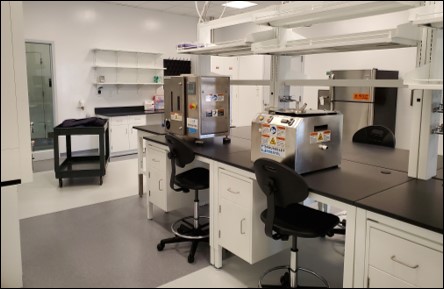
The BIC’s wet lab supports chemistry, biotechnology, and life sciences activities and includes laboratory benches, utilities, RO/DI water systems, fume hoods, laboratory refrigeration, storage, and space for specialty equipment installed by long-term members or partners.
More information about the BIC can be found at the Berkshire Innovation Center.